
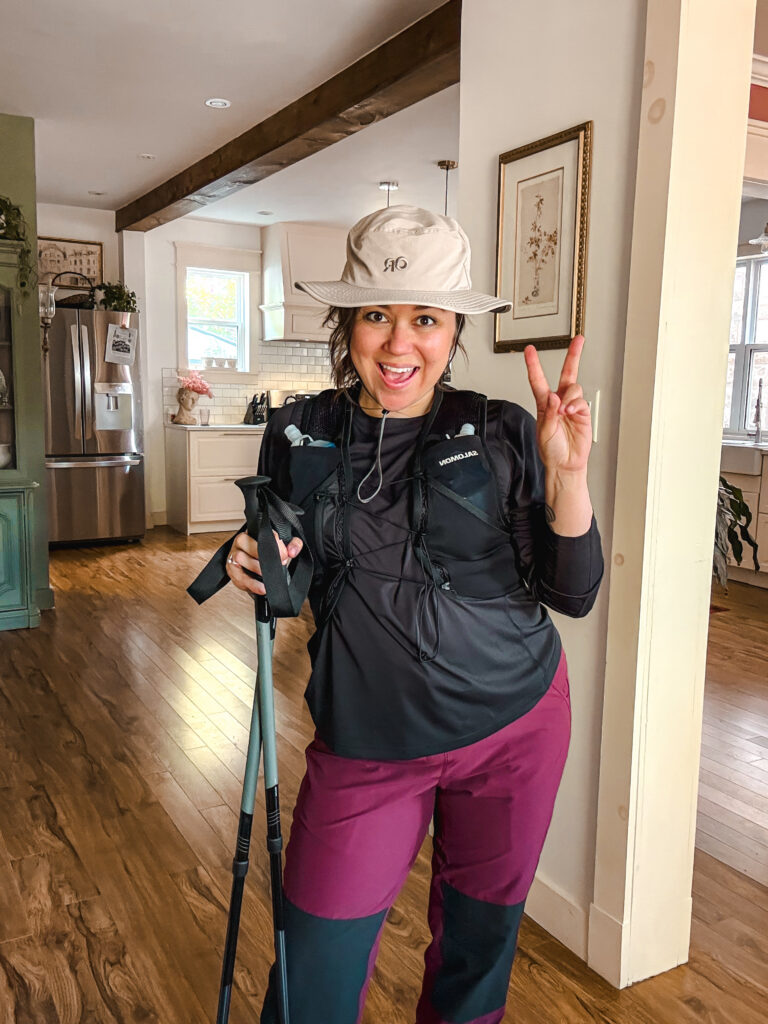
Last Saturday, my alarm went off at 2:30 in the morning. I made breakfast, double-checked my gear, and tried to quiet the nerves that had been building for weeks. I was about to attempt the longest endurance hike of my life: the Dobson Trail, 58 kilometres, in a single day.
What I didn’t know yet was how much that trail would test me, or how much it would change me.
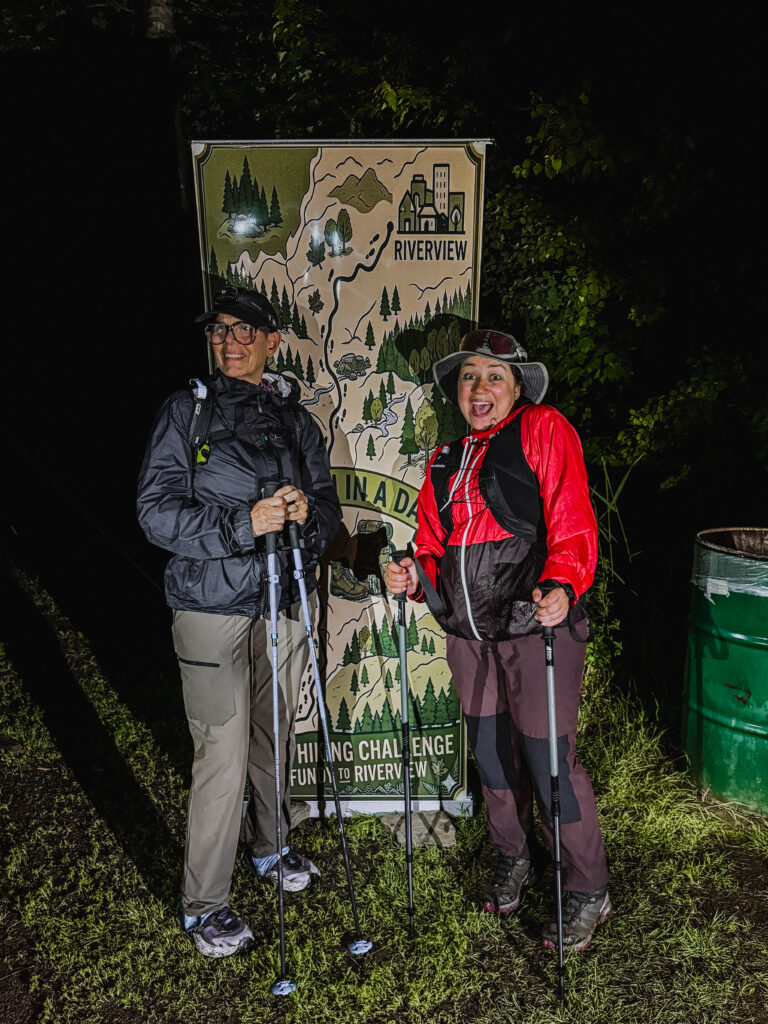
My husband woke up at 3am to drive me to Fundy, where the trek would begin. I’ll never take that kind of support for granted. When I arrived, I was greeted by the biggest smiles from the organizers. 75 people had registered. 63 showed up that morning. 43 finished.
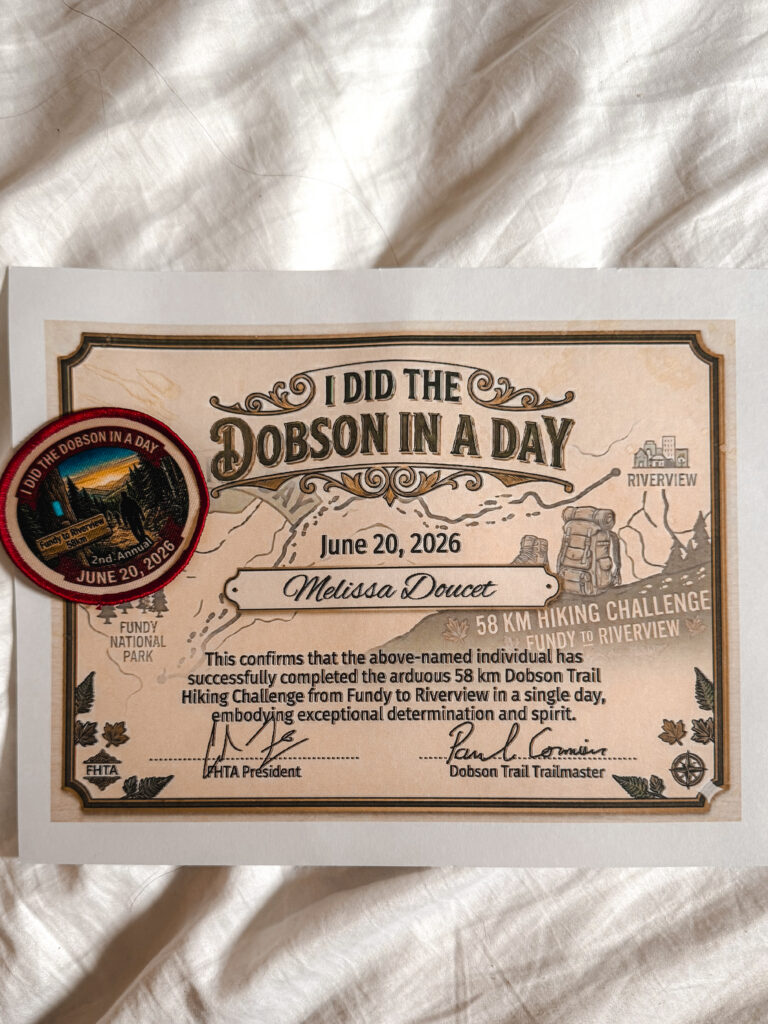
I am proud to be among those 43.
The Trail Itself
Even though I’d hiked portions of the Dobson before, that day felt like a completely different trail. It rained hard three hours in (on and off the whole day). The kind of rain that changes the landscape, fills every root and rock with a slick film, and makes your headlamp reflect more water than light.
The first 44 kilometres were tough, but manageable. I was tired, wet, and moving steadily through terrain I recognized in some places and didn’t in others. I was still enjoying myself.
The last 14 kilometres were something else entirely. But the last 8, I’ll remember for a long time…
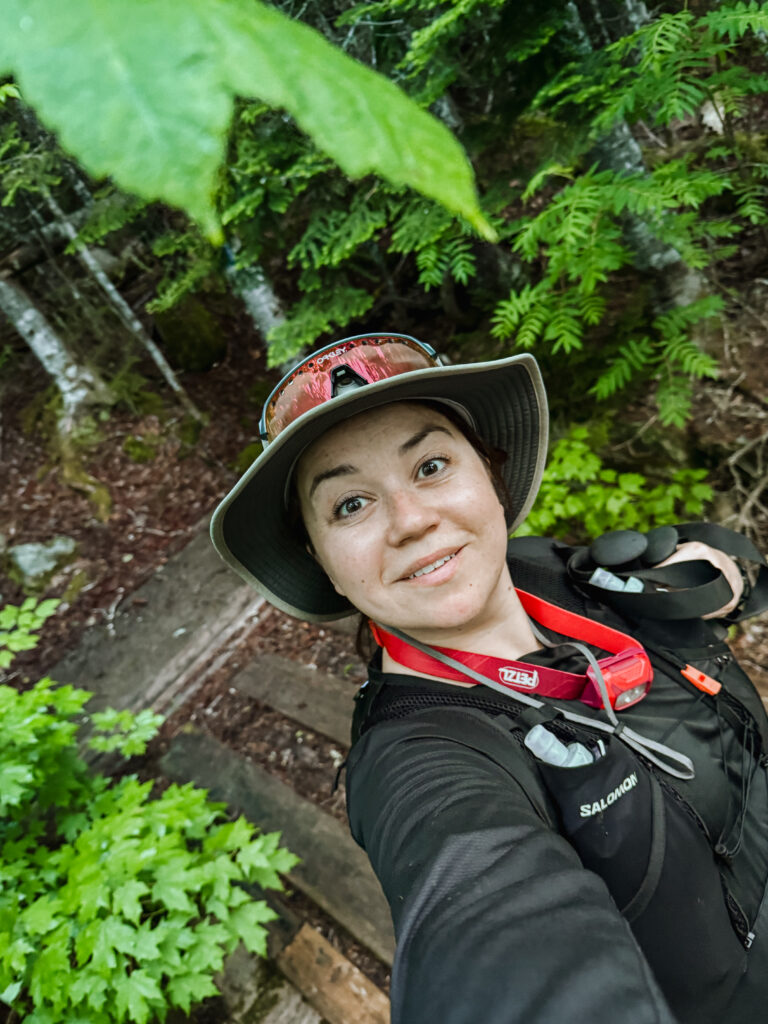
Hiking in pure darkness, trying to spot the blue trail markers through a curtain of rain with a headlamp that was working against me more than for me, pushed me to a place I hadn’t been before. Honestly, I was scared. What made it bearable was meeting another hiker, Jackie, along the way. We walked that final stretch together. I don’t want to think about what it would have felt like alone.
The Mental Game
I’ve heard people say long-distance hiking is more mental than physical, and I believed it going in. But I understand it differently now.
You will hurt and you will question yourself. You will spend a significant portion of that day in what I can only describe as survival mode. And that’s exactly where the change happens. Not after the finish line, but in those long, dark kilometres before it. I don’t think I had any thoughts other then: am I eating enough, how much water do I have left, I need to remember to change my socks again, is that a blister I feel? …
No training plan fully prepares you for this trail. The 58 kilometres will find the edges of whatever you’ve built. What carries you through is the decision, made over and over, to keep moving.
The Gear That Actually Mattered
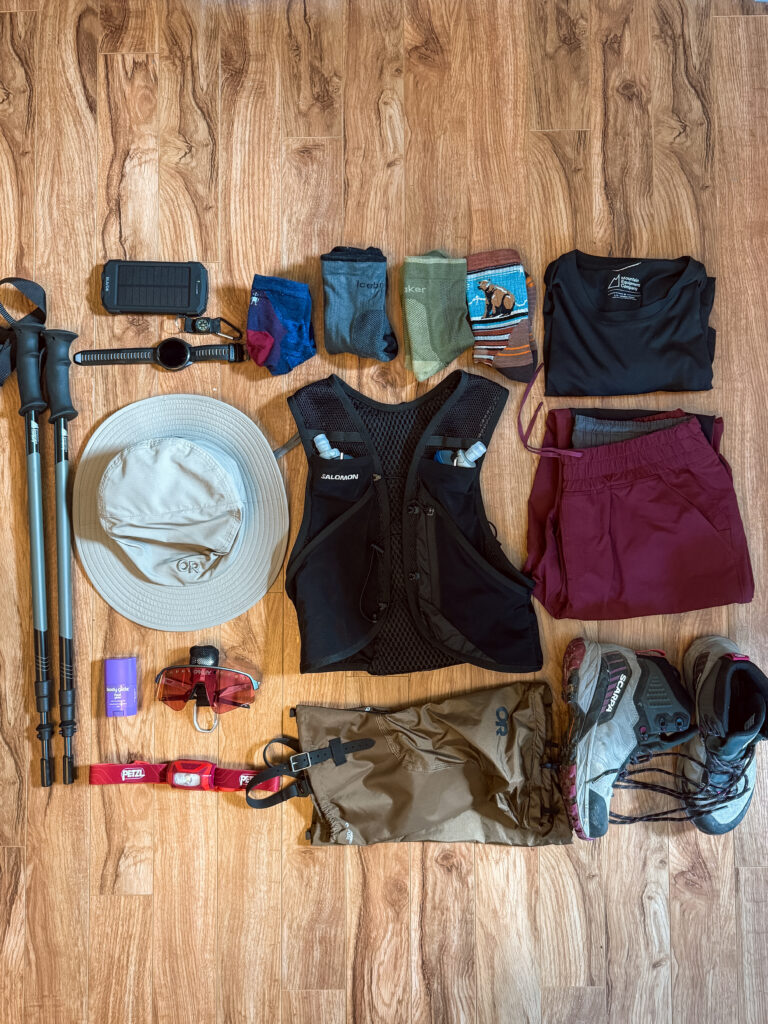
I’m not someone who buys gear for the sake of it. Everything I brought had a job to do. Here’s what genuinely made a difference:
Footwear
Waterproof boots are non-negotiable. I hike in Scarpa boots and they held up across every muddy descent and uneven kilometre. The ankle and knee support matters more than you’d think over that kind of distance. Pair them with wool socks (I swear by Smartwool and Icebreaker), no cotton, full stop. I finished with one blister, caught it at 22 kilometres, hit it with KT tape, and it didn’t grow. That tape is worth its weight.
Trekking Poles
By the final kilometres, my arms were doing as much work as my legs. On slippery, uneven terrain in the dark, poles aren’t just helpful, they’re stabilizing.
Hydration Vest
This was a supported event, meaning water stations every few hours, but I still needed to carry food and water in between. My Salomon vest was compact enough that I barely felt it, and it held everything I needed.
Garmin Watch
My goal was a consistent pace of 4km/h throughout the day. My Garmin Forerunner 965 tracked it the whole way, even through the mud detours that slowed me down. Seventeen hours of use, and it still had battery left. It also has offline map capability, which was a real comfort once it got dark.
Headlamp and Hat
A quality headlamp is not optional for a hike that could put you in the woods after dark. My Petzl did its job. And my Outdoor Research hat was one of the best calls I made. Waterproof, full coverage, stayed on through everything. I got mine at Take It Outside in Moncton, one of my favourite store to update my gear before events!
Bug Spray
Ben’s. Always Ben’s. No notes.
The Extras That Paid Off
Advil and Tylenol. Body Glide. A solar power bank to keep my phone alive. A compass and a bear bell.
The Fuel
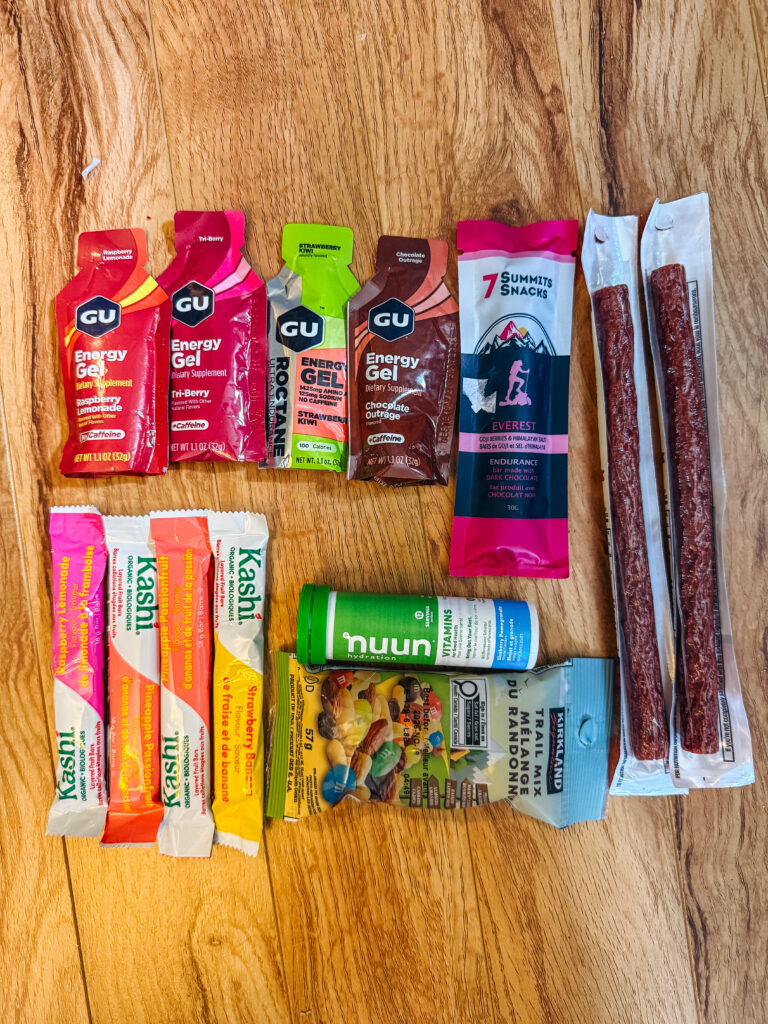
I’m not a gel person by nature, but I brought four GU Energy Gels and they delivered when I needed a real energy boost. The rest of my kit: Nuun hydration tablets, beef sticks for salt and protein, Kashi fruit bars, Kirkland trail mix, and 7 Summits Snacks bars. I knew the aid stations would have food, so I kept it light and strategic.
Dark chocolate also. Always dark chocolate.
What to Know Before You Do the Dobson Trail in a Day
If you’re considering the Dobson Trail in a Day, go in knowing what you’re signing up for.
This is not a trail you conquer with a training schedule. You prepare your body, yes, but the trail will meet you somewhere your body can’t carry you. That’s where your head takes over.
43 of us finished that day. Every single one of us earned it differently. And every single one of us came out changed on the other side.
See some of my other favourite hikes here!

Comments +